

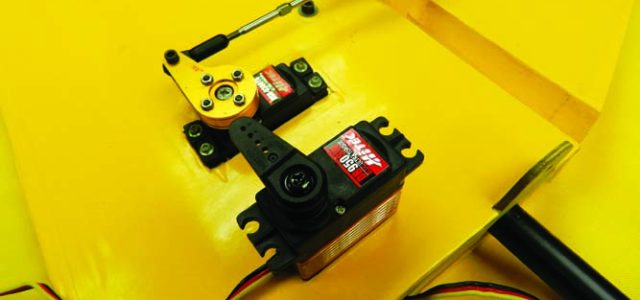
A servo is the link between your fingers and your model’s control surface movements. Servos that are appropriate for the model you are flying ensure it performs well and increase your enjoyment of your aircraft. There are so many servo options available that choosing the right one for your model can be overwhelming. This article hopefully will guide you in making the right choices. Although there are a lot of servo brands, for simplicity we will focus on Hitec, which is the most readily available brand. Let’s get started with some servo basics.
SERVO BASICS
– Analog vs. digital. Not that many years ago, all servos were analog. This meant that a servo’s torque increased over the time that the servo was moving. Digital servos develop their maximum torque instantaneously and draw less current than analog servos.
– Torque tells you what power the servo delivers. Expressed in ounce-inches, torque is the amount of weight the servo can lift at a right angle to a servo arm that is 1-inch long. The higher the torque rating, the higher the power of the servo. Torque ratings can go anywhere from 40 oz.-in. inches to over 500 oz.-in. Torque ratings should be based on the weight and speed of your model. A lighter, slower model will require less torque than a heavier, faster model.
– Servo speeds are typically quoted in time to travel 60 degrees. Faster servos will make your model feel more responsive to control inputs. Typically, you want faster servo speeds for primary flight control surfaces. For other applications, such as throttle, flaps and retracts, high servo speeds are not a necessity.
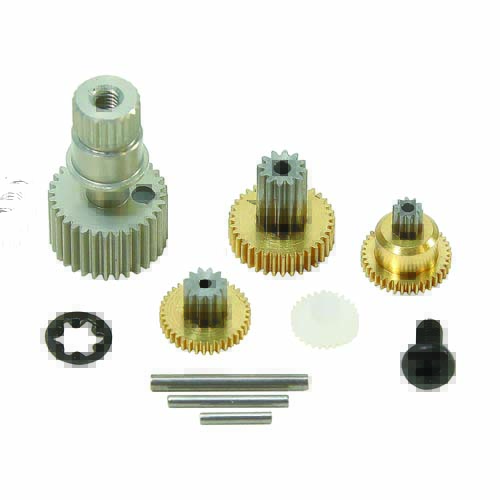
Components of a metal gear train for a Hitec servo.
– Voltage ranges have changed over the years as different types of batteries came into use. When NiCd batteries were the norm, 4.8 volts was the standard. As NiMH became more prevalent, 5-cell or 6-volt systems grew in popularity. Most manufacturers provide specifications using both 4.8-volt (4-cell) and 6-volt (5-cell) battery packs. Today, we have LiPo and Li-ion batteries that produce even more voltage, typically 7.2 to 7.4 volts. That is the reason for the availability of High Voltage servos.
One advantage of using high voltages in servos is that they move faster with more voltage and develop more torque. Remember to check the voltage ratings of your servos before hooking them up to the airborne flight pack!
– Gear trains are usually plastic or metal. Plastic gear trains can be easier to strip, requiring replacement, and metal gear trains are usually more robust, but louder. Hitec offers some servos with heavy duty “Karbonite Gears,” a proprietary plastic that offers metal gear performance using plastic.
– Brushed vs. brushless refers to the type of electric motor that is contained in your servos. Brushed servos can be more affordable, but over time, carbon builds up on the motor’s commutator and the servo loses speed and power. With the availability of brushless servos, the wear on the servo motor becomes non-existent, and the servo has longer lifespan.
– Coreless vs. brushless. Coreless servo motors are another kind of brushed motor. An advantage of Coreless is the lower stator mass which can increase starting and stopping speed and lower power consumption. Coreless motors offer better power and can change directions more quickly and accurately. Brushless motors produce ultimate power, quicker torque, faster response, greater efficiency and are the longest lasting type of servo motors.
– Bearing types. Servos do experience some wear depending on their application in airframes. Vibration is one of the bigger contributors, and gas-powered models tend to produce more vibration than typical glow-powered models, and electric-powered models produce even less vibration. Some servos are equipped with ball bearings on the servo output shaft to minimize the amount of wear that vibration causes. Ball-bearing-supported output shafts contribute to longer servo life and better control movement/resolution.
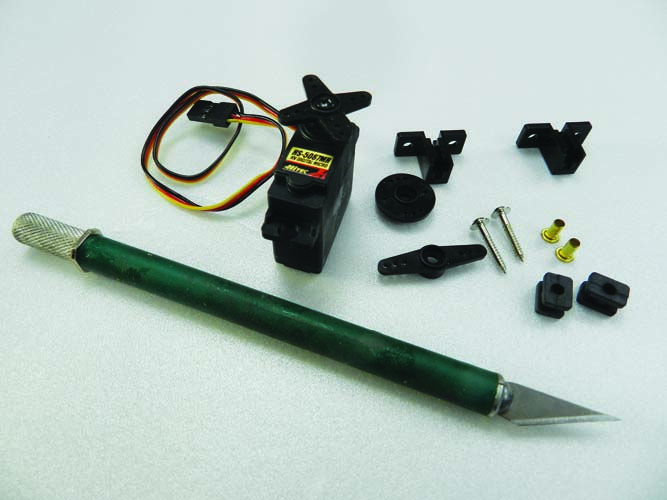
HS-5087MH digital micro servo with mounting hardware and supplied extra servo arms.
PARK FLYER SERVOS
This category of model aircraft does not necessarily have requirements for high-speed servos and or high torque servos. There is no need for expensive servos, but consider digital servos over analog for the reasons cited earlier.
HS-55 Feather (20.83 oz.-in.; .14 sec/60˚) Considered an analog micro servo by virtue of its size and weight (only .28 oz.), this $16 servo has nylon gears.
HS-5055MG (22 oz.-in.; .17 sec/60˚) The digital version of the Feather with metal gears is $25.
HS-5070MH (53 oz. in – .12 sec/60˚) A high-torque digital micro servo with metal gears and a ball bearing, this $40 servo is intended for fast models and is compatible with 2-cell LiPo or 5-cell NiMH packs.
HS-5087MH (59.7 oz.-in.; .13 sec/60˚) This high voltage digital micro servo is $45 and compatible with 2 cell Li-Po or 5 cell NiMH battery packs.
D89MW (118 oz.-in.;.11 sec./60˚) This digital micro ultra-torque servo ($70) has a coreless motor, metal gears and dual ball bearings. It can be used for both park flyers and smaller sport models. The output shaft has a 25-tooth spline.
HS-85BB (48.6 oz.-in.; .14 sec/60˚) Called the “Mighty Micro,” this $26 analog nylon-gear micro servo has Karbonite gears and a ball bearing on the output shaft. It is for fast park flyers.
HS-40 (10.4 oz.-in.; .10 sec/60˚) An analog nylon gear servo named “Economy Nano,” it is even smaller than a micro servo. With an overall weight of just .16 ounce, this $16 servo is ideal for indoor flyers.
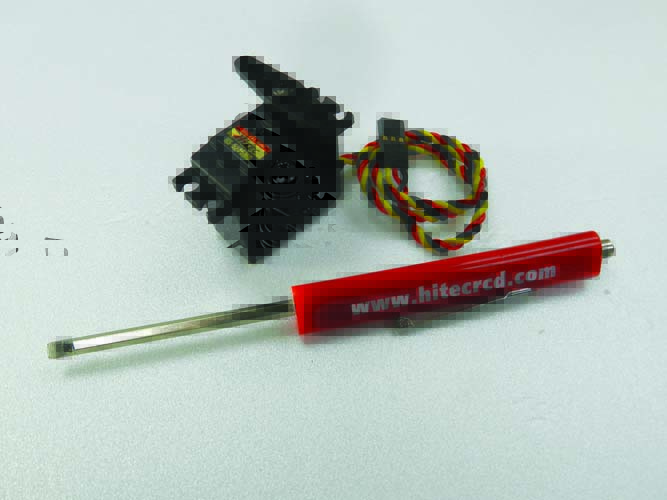
The HS-5245MG digital micro servo features dual ball bearings on the output shaft.
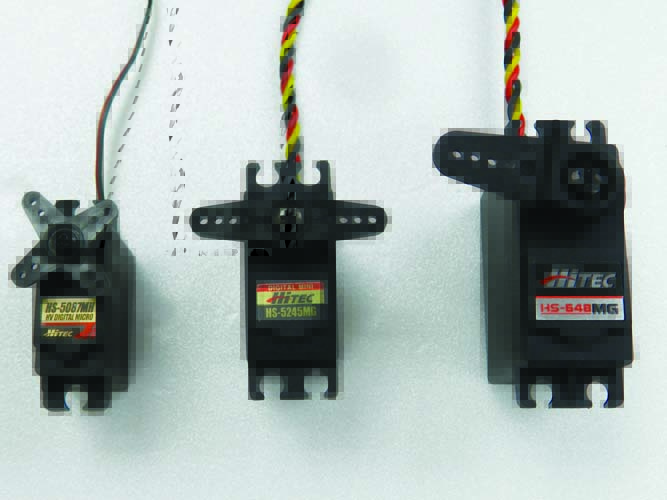
Comparison of size differences between micro, mini, and standard servos.
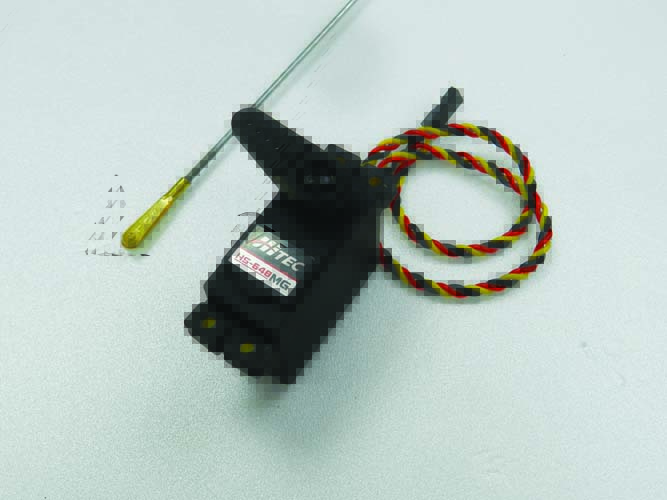
The HS-648MG is a high-torque analog servo with a 25-tooth spline.
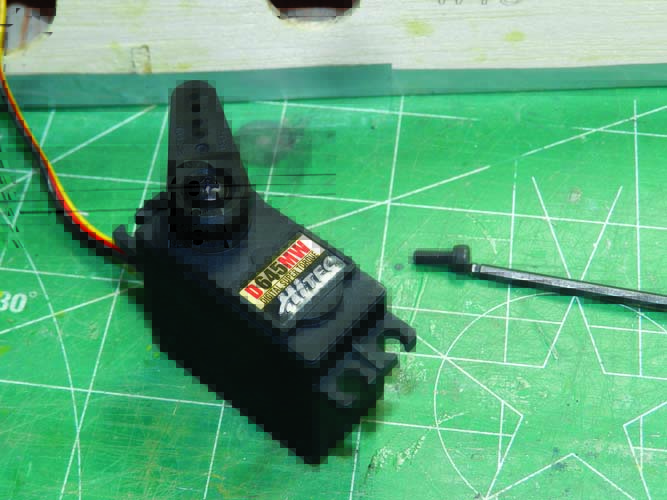
The D645MW a digital standard servo that is suitable for giant-scale models.
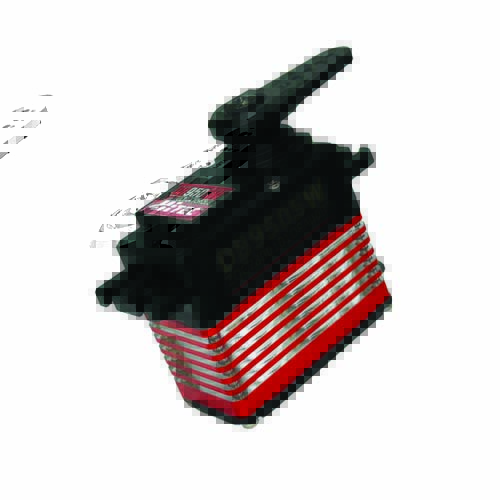
The DB950SW is a premium ultra-torque digital servo.
Sport Model Mini Servos
Let’s explore the wide variety of servos available and examine the unique features of servos intended for sport models. We will begin with mini servos, which require less space and are lighter than standard servos. With a minimum torque output of around 50 to 60 oz.-in. and intended for smaller, lighter models, many micro servos are less powerful than servos for larger models.
HS-225BB (61.0 oz.-in.; .13 sec/60˚) This $21 analog mini servo with resin gears and a ball bearing on the output shaft.
HS-5245MG (76 oz.-in.; .12 sec/60˚) This $45 digital mini servo has dual ball bearings on the output shaft.
HS-7245MH (88 oz.-in.; .11 sec/60˚) This is a high voltage, high-torque digital mini servo ($77). It has a metal gear train, a coreless motor and is compatible with a 7.4V 2-cell LiPo or 6-cell NiMH.
Sport Model Standard Servos
The next size up are the larger standard servos. You’d expect to find these in most .40- to .60-size models.
HS-422 (54.1 oz.-in.; .16 sec/60˚) This $19 analog standard servo uses iron-Oilite bushings and has a high-impact resin gear train. I would consider this to the minimum standard servo to use in most .40 size planes and would not recommend it for larger airframes.
HS-488HB (66.6 oz.-in; .18 sec/60˚) This $22 analog standard servo uses dual ball bearings. It also has heavy-duty Karbonite gears. It can be used in up to .60-size airframes.
HS-430BH (69.4 oz.-in.; .14 sec/60˚) This high-voltage analog standard servo uses both dual ball bearings and a dual resin gear train. It is compatible with 2-cell LiPo or 6-cell NiMH and for $20 is a perfect upgrade for many small foam ready-to-fly models.
HS-648MG (156.9 oz.-in.; .20 sec/60˚) This high-torque analog standard servo has three metal gears, dual ball bearings, and a 25-tooth spine. It is a very robust standard servo for $35!
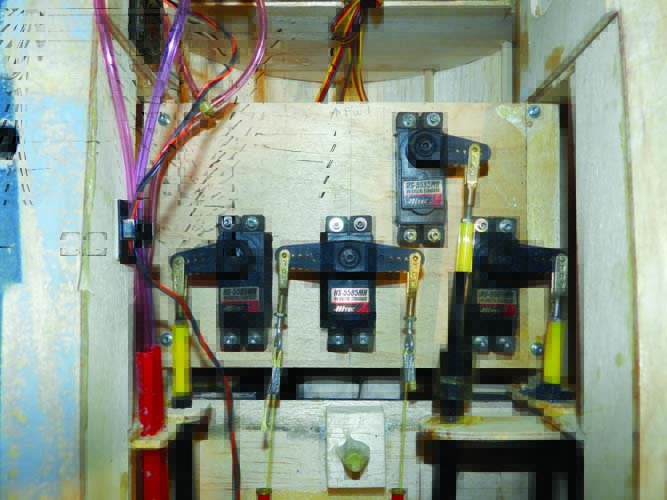
HS-5585MH digital servos installed in the author’s giant-scale Ziroli Corsair.
Specialty Standard Servos
These servos are intended for specific applications, such as in glider wings or for retracts.
HS-75BB (113.8 oz.-in.; .34 sec/60˚) Designed to operate retracts (which tend to require more torque than typical control surfaces), this analog, low-profile servo has dual ball bearings and durable nylon gears. Its low profile allows it to fit more easily into wing center sections. It travels from one end to the other (180 degrees) and is not proportional. This $33 servo offers slow speed for realistic retract operation.
HS-125MG (48.6 oz.-in.; .13 sec/60˚) Specifically designed to fit into thin wing panels, this analog servo has dual ball bearings, four metal gears, and one metal plastic gear. This $45 servo is only 10mm thick.
D145SW (97.2 oz. in.; .14 sec/60˚) A digital slim wing servo with metal gears, dual ball bearings, and a coreless motor, this $66 servo was created for use in glider wings and high-performance electric models. Side-mounted and only 10mm thick, it can be powered by a wide variety of voltages.
D131MW (40.2 oz.-in.; .11 sec/60˚) Intended for gliders and high-performance electrics, this $70 digital ultra-nano wing servo is compatible with 1- or 2-cell LiPos. It features a coreless motor in a full metal case as well as durable metal gears with dual ball bearings.
Giant-Scale Model Servos
Giant scale models typically require high-torque-rated servos as the forces acting on their control surfaces are much higher than they are for .90- to 1.20-powered models. Plus, many giant-scale models are powered by gasoline engines, which can develop much more vibration than glow or electric models. I recommend servos that have ball bearings and a minimum of 100 oz.-in. of torque. Metal gears are another consideration, as sometimes even bumping your control surfaces when loading and unloading your giant-scale model can result in stripping a servo’s plastic gears.
HS-5585MH (236.1 oz.-in.; .14 sec/60˚) Perfect for giant-scale warbirds, this $73 digital, high-voltage standard servo has a coreless motor, metal gears, and is 2-cell LiPo compatible. I use this servo exclusively in all my giant-scale warbirds.
D645MW (179.1 oz.-in.; .17 sec/60˚) This $44 digital, high-voltage, standard servo offers a wide torque range when used with a variety of voltages. It also has a coreless motor, metal gears, dual ball bearings and a 25-tooth spline.
D954SW (402.7 oz.-in.; .12 sec/60˚) A digital, high-voltage standard servo that offers a huge amount of torque when powered by a wide range of voltages, this unit has a coreless motor, durable metal gears and dual ball bearings. The output spline has 25 teeth, and it even has a heat sink for the servo motor. This $100 servo is perfect for giant-scale and IMAC planes.
DB961WP (763.8 oz.-in.; .15 sec/60˚) This digital, ultra-torque standard servo has a brushless DC motor in a full metal case that is waterproof. The $180 servo also has a robust gear train with dual ball bearings and a 25-tooth output shaft. It is perfect for all classes of aircraft.
DB950SW (555.5 oz.-in.;.14 sec/60˚) This digital, high-voltage standard servo uses a brushless DC motor. An ultra-torque unit, it uses durable metal gears with dual ball bearings and has a 25-tooth spline. It also has a heat sink for the servo motor. Priced at $140, it is the “Cadillac” of Hitec servos.
Other Servo Considerations
If you’re flying an older model or buy a “used” model that has analog servos, it may be wise to swap them out for newer digital servos. If your ready-to-fly plane came with factory-installed analog servos, upgrading to digital is a great way to improve performance.
If you are considering using a gyro in your model, do not use analog servos. Gyros constantly ask servos to make small corrections, so if you’re using analog servos, they will draw more current which could compromise your gyro’s performance and dramatically decrease your flight time.
Take the time to examine how a servo manufacturer services their products. Besides the warranty, determine where you can send your servos in for service. Parts availability is another concern. Are replacement servo gears readily available? If you are inclined to make repairs yourself, make sure the manufacturer can support your needs.
BOTTOM LINE
We all know how power choices can affect the performance of your model. We also know that the choice of radio transmitters and receivers will also affect your model’s performance. Now, we can better understand how your model’s servos are equally important to its performance. Choose wisely!
Text & photos by Ed Rogala












Thank you for all straight forward article.
Excellent article, it would be great to know when to change them, thanks
Digital servos develop their maximum torque instantaneously and draw less current than analog servos
this not true,most digital servo draw more because the higher torque en speed all so very good linkage(no binding)is needed because the draw gets way more than a anlog servo iff there is a verry little binding
For de parkflyer servo ill start for a slow model at least a 10 sec/60 servo other than that is way to slow
High Voltage servos
Go easy at 8.4v and more these days